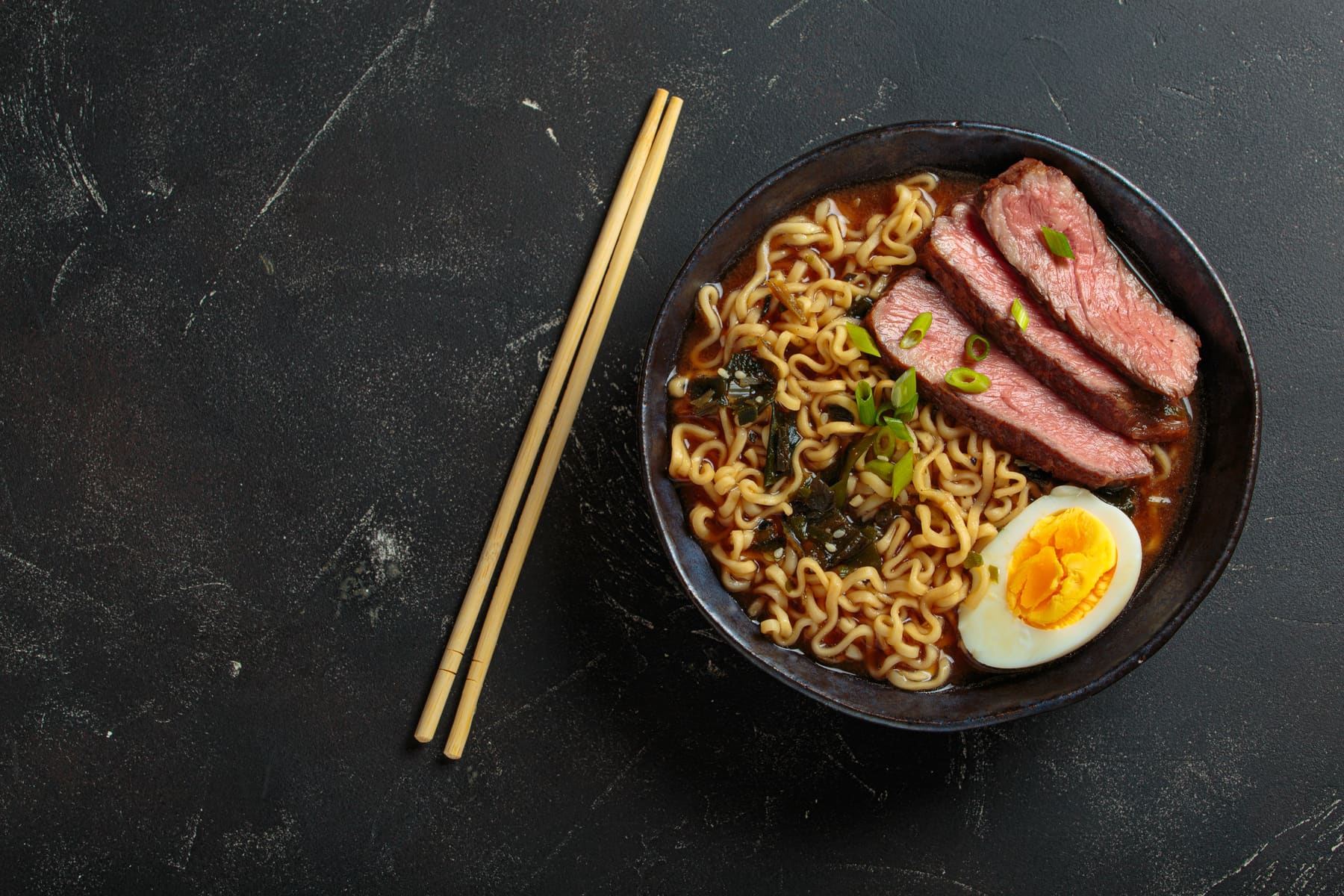
Ordering ramen in Japan can be confusing the first time, because at many shops nobody comes to take your order. Instead, you buy a ticket from a machine by the door, hand it over, and your bowl usually comes quickly. This guide walks through each step, from the machine to the last of the soup, with the few Japanese words that help.
Before you go in
Many ramen shops are small, with counter seating. GO TOKYO, the city's official travel guide, notes that popular shops can have long queues, and that ramen shops are places to eat and leave rather than to linger. If there is a queue, join the end of it, and keep your group together.
Bring cash. GO TOKYO says many ticket machines accept only cash, so have notes and coins ready before you reach the front. As a rough guide for ramen shops, it puts a basic bowl at around ¥800 to ¥1,300, with toppings extra.
Before you join the queue, look inside the door. At shops with a machine, you may be expected to buy your ticket first and then wait.
Using the ticket machine
The machine is usually near the entrance. Each button stands for one item: a bowl of ramen, a topping, a side dish such as gyoza or fried rice, or a drink. Many buttons have a photo or a price, even when the labels are only in Japanese. If you are not sure what to choose, GO TOKYO suggests going with the shop's recommended bowl.
Buy everything you want at once: your ramen, any extra toppings, sides and drinks each have their own ticket. If you cannot read the buttons, a translation app pointed at the machine helps, and it is fine to ask the staff. Pointing at a photo works too.
Paying and getting change
The Tokyo Convention & Visitors Bureau's manners handbook shows the steps: put your money in, press the button, take your ticket, and hand it over in exchange for your meal. The handbook also notes that the machines are typically by the entrance. Put the money in before you press anything.
When you have finished choosing, check the tray for your change before you walk away. Some machines return it straight away, and others have a button or lever to press. If the machine will not take your note, ask the staff for help.
Handing over your ticket
Take your tickets to a seat, or wait to be shown one, and hand them to the staff, as GO TOKYO describes. If the staff are busy, put the tickets on the counter in front of you where they can see them.
Some shops do not have a machine at all, and the staff take your order at your seat instead. That is covered at the end of this guide.
Saying how you like it
When you hand over your ticket, you may be asked a question. Some shops let you choose thick or thin noodles; others ask how firm you want them, from firm to soft. There is no wrong answer. If you are not sure, say futsu (普通), meaning normal.
At shops serving Hakata-style tonkotsu ramen, with very thin noodles in a creamy pork-bone broth, the choice of firmness is part of the style. The words you may hear, from firmest to softest, are bari-kata (extra firm), kata (firm) and yawa (soft). Kata de onegaishimasu means "firm, please".
Kaedama: ordering more noodles
Kaedama is a second portion of noodles added to the broth you have left. It is associated with Hakata ramen: according to the Japanese government's Highlighting Japan magazine, thin noodles in small portions, served to busy workers around the Port of Hakata, appear to have let people order extra noodles into the same broth. Many shops serving this style offer it.
To order it, keep some broth in your bowl. If the shop uses a ticket machine, look for a button for it, or ask the staff; otherwise say kaedama onegaishimasu when you have nearly finished your first noodles. You can choose the firmness again.
When you finish
Slurping is normal. GO TOKYO calls it the standard way to eat ramen, not something rude. Some shops put pickled ginger, garlic or other condiments on the counter for you to add.
When you have finished, leave fairly soon, especially if there is a queue outside. You have already paid at the machine, so there is no bill to wait for. A thank you as you go, gochisousama deshita (ごちそうさまでした), is welcome, and there is no tip to leave.
If there is no machine
At shops without a machine, sit down and the staff will come to take your order. Point at the menu if you need to. The manners handbook suggests asking the staff whether to pay at your table or at the register. Carry cash in case the shop does not take cards.
Once you know how to order, the next question is which bowl to try. Our guide to ramen in Tokyo covers the main styles, such as shoyu, shio, miso and tonkotsu, and where to find them.
Sources
- GO TOKYO: Ramen in Tokyo, what to try, where to go and how to order (updated 5 November 2026)
- Tokyo Convention & Visitors Bureau: How to Enjoy Tokyo! Manners and customs handbook, English edition (September 2025, PDF)
- Highlighting Japan (Government of Japan): Hakata ramen, November 2024
Figures checked against the sources above on 12 November 2026.
Continue from here