Cuisine
Yakitori in Tokyo
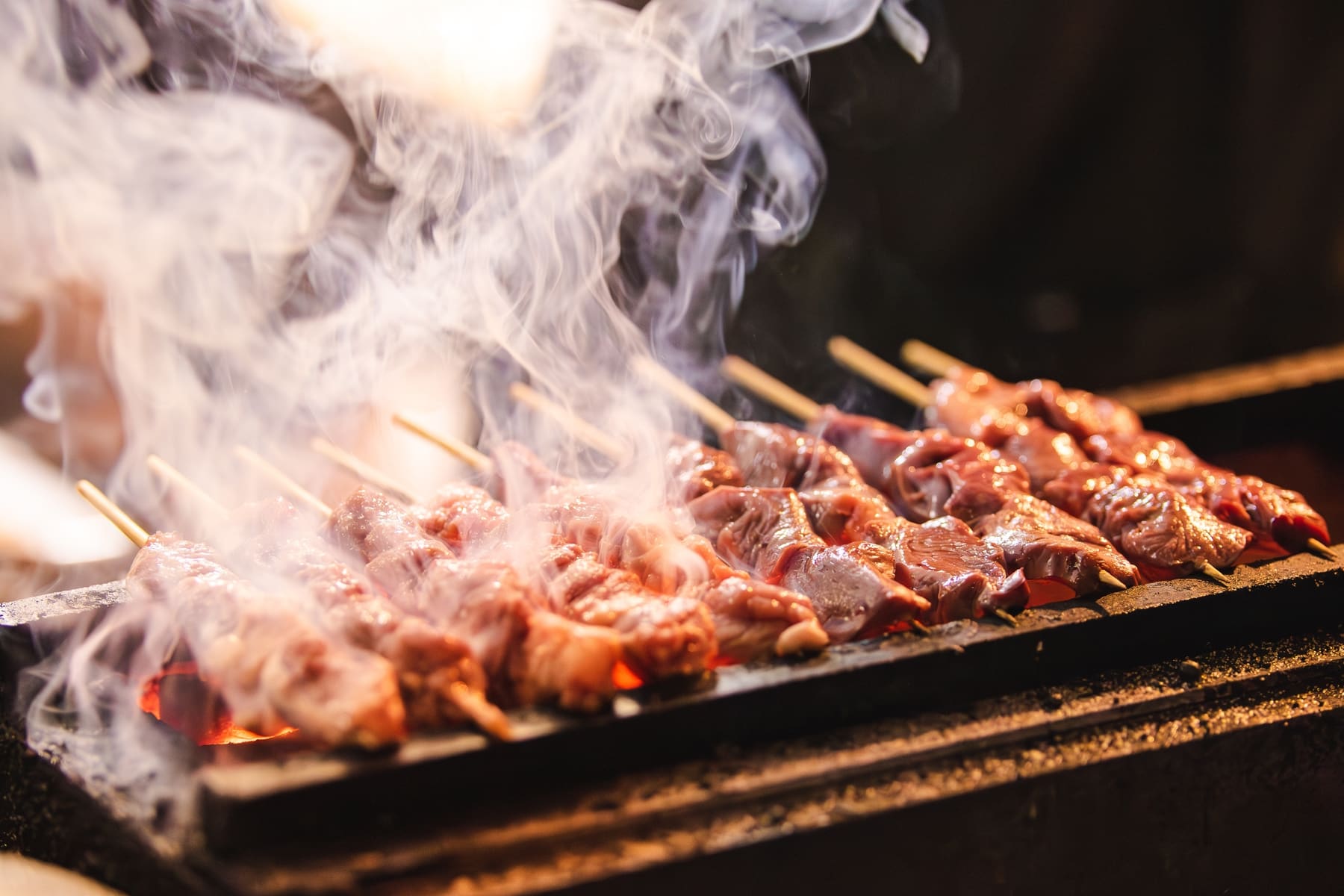
Yakitori is chicken grilled on bamboo skewers, usually over charcoal, and it is one of the most common things people in Tokyo eat with a drink in the evening. A yakitori shop uses almost the whole bird, so a meal is a run of small skewers, each a different part, seasoned with salt or a sweet soy glaze.
What is on the skewers
The menu is mostly a list of chicken parts. Momo is thigh, a familiar cut. Negima is thigh with pieces of spring onion between. Sasami is breast fillet, sometimes served with wasabi or plum. Kawa is the skin, grilled until crisp, and tebasaki is the wing.
Tsukune, a minced chicken meatball or patty, is on most menus, and it is often served with an egg yolk for dipping. Then come the organs and other parts: reba (liver), hatsu (heart), sunagimo (gizzard), and nankotsu (cartilage, crunchy and popular with drinks). Many shops also grill vegetables such as shiitake, green peppers, ginkgo nuts and spring onion, and some grill pork and beef as well.
Salt or tare
Most skewers come seasoned one of two ways: shio, with salt, or tare, brushed with a sweet soy-based sauce while it grills. You will often be asked which you want. Many shops have a preference for each part, and if you are unsure, asking the staff to choose, or saying omakase, is normal.
On the table you may find shichimi, a mix of chilli and other spices, and sansho pepper for sprinkling on the skewers. Some shops will tell you which parts they recommend with salt.
How to order at a yakitori shop
At a casual shop, order a drink first, then a few skewers at a time rather than everything at once. Skewers are usually priced one by one, and many menus have a mixed set of several skewers, which is an easy way to start. Order more when you are ready.
Higher-end yakitori counters often serve a set course instead. The chef decides the order and brings one skewer at a time, with a few side dishes such as grated daikon or a small salad. You can usually add skewers at the end. If there are parts you would rather not eat, such as liver or other organs, say so at the start.
Pull the meat off the skewer with your chopsticks if you are sharing, or eat it straight from the skewer if not. Many shops put a cup or tube on the counter for finished skewers.
Cheap shops and course counters
Yakitori covers a wide range. At one end are standing bars and old shops under railway arches and in narrow drinking alleys near the big stations, where you eat a few skewers with a beer and leave. Chain izakaya also serve yakitori, and they are among the cheapest and easiest places to try it, with picture menus.
At the other end are small counters that serve a single course and take bookings well ahead. Higher prices usually reflect the chicken, the charcoal and the care at the grill. A casual shop is an easy first visit; a course counter is worth it if you already know you like yakitori.
Where to go and what to drink
Yakitori shops are found all over Tokyo, but they cluster around the busy stations and in the old drinking alleys. Omoide Yokocho, the narrow lanes beside Shinjuku Station's west exit, is known for small yakitori counters, and the area under the railway tracks around Yurakucho and Shimbashi has long been lined with yakitori and drinking places. These are good places to see what yakitori is like before choosing a particular shop.
Beer is the usual drink to start, often followed by a highball (whisky and soda), shochu or sake. Most shops also serve soft drinks and oolong tea. Yakitori is generally an evening meal, and many shops open only for dinner; some open in the late afternoon. A few serve oyakodon, a bowl of chicken and egg over rice, at lunch, which is an inexpensive way to try a good shop's chicken.
The skewers are small, so a meal is usually several of them shared between the group, with a few side dishes. Rice dishes and chicken soup often come at the end, the way noodles or rice end a meal elsewhere.
Smoke, booking and dietary needs
Expect smoke. Many casual shops grill near the door or at the counter, and your clothes may smell of charcoal afterwards. Casual shops usually take walk-ins, and the popular ones have queues in the early evening; course counters need booking.
Yakitori is not for vegetarians, although the grilled vegetables and side dishes can make a small meal. The tare usually contains soy sauce, mirin and sugar, and some shops add chicken juices to it, so it is not suitable for every diet. Some shops serve sasami and liver lightly cooked in the middle. Japan's Ministry of Health, Labour and Welfare warns that raw or undercooked chicken, including rare sasami, liver and yakitori, causes Campylobacter food poisoning, and advises eating chicken cooked through. Ask for yours to be cooked through when you order.
Sources
Figures checked against the sources above on 12 November 2026.
We are still choosing the restaurants for this page. Until they are here, our guides cover how to book and what to expect.