Cuisine
Ramen in Tokyo
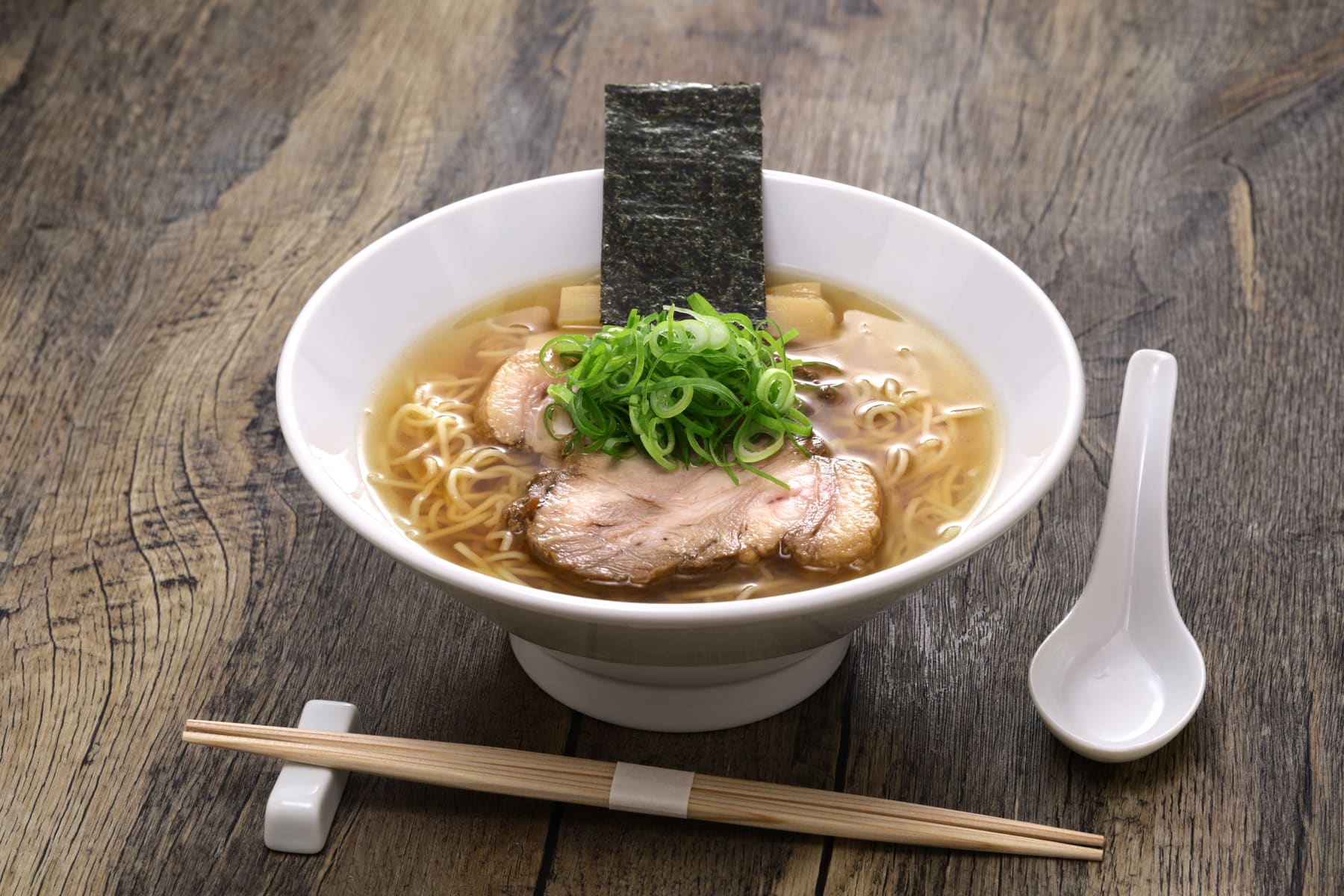
Ramen is Tokyo's everyday meal: wheat noodles in a hot broth, eaten fast at a counter. The city's own style is a clear soy-sauce (shoyu) broth with thin, curly noodles, but many of Japan's regional styles have a shop here, and choosing between them is most of the fun.
Types of ramen
The broth is named after its seasoning or its base. Shoyu is seasoned with soy sauce and is the Tokyo classic. Shio is seasoned with salt and is usually the lightest and clearest. Miso, the style of Sapporo, is richer and often comes with stir-fried vegetables and thicker noodles. Tonkotsu, from Kyushu, is a cloudy, creamy broth boiled from pork bones, usually served with very thin, straight noodles. Many shops blend these, so the menu name is a guide rather than a rule.
Tsukemen is the one to know if you have eaten ramen elsewhere. The noodles come cold or warm on one plate, and a smaller bowl of thick, strong broth comes alongside; you dip each mouthful rather than eating the noodles in soup. Tsukemen is generally traced to a Tokyo shop in the 1950s, and many shops now serve it alongside their ramen. When the noodles are gone, ask for soup-wari: the staff add hot, light stock to what is left in the dipping bowl so you can drink it as soup.
Two other styles have their own vocabulary. Iekei ramen, which comes from neighbouring Yokohama, is a rich pork-and-soy broth with thick noodles, spinach and sheets of nori, and you are asked how you want it: noodle firmness, strength of flavour and amount of fat, each from soft or light to firm or strong. If you are unsure, say futsu, meaning normal, to all three. Jiro-style ramen is a different thing again: very large bowls piled with bean sprouts and cabbage, thick noodles and fatty pork. At many of these shops the staff ask whether you want garlic as the bowl is finished, and that is the moment to ask for extra vegetables, garlic or fat. If you only want the bowl as it comes, say so when you are asked.
How to order
At many ramen shops you order and pay first, at a ticket machine by the door, then hand the ticket to the staff when you sit down; some machines take only cash. Popular shops have queues, and a ramen counter is somewhere to eat and leave rather than sit and talk. For the machine, toppings and noodle firmness, see our step-by-step guide to ordering ramen.
Two price figures are useful, and they measure different things. In September 2026, a bowl of shoyu ramen (chuka soba) at a restaurant in Tokyo's 23 wards averaged ¥620 including tax, according to Japan's Retail Price Survey; that is a statistical average for an ordinary bowl, not a price list for ramen shops. As a rough guide for ramen shops themselves, GO TOKYO, the official Tokyo travel guide, puts a basic bowl at around ¥800 to ¥1,300, with toppings extra.
When to go
Queues are part of ramen in Tokyo, and the well-known shops rarely take reservations. Join the end of the line outside, keep your whole group together, and do not hold a place for someone who has not arrived; many shops will not seat a group until everyone is there. Staff sometimes come down the queue to take orders or ask you to buy your ticket while you wait. If a shop has a ticket machine inside, check whether you are meant to buy before joining the line.
Timing matters more than location. Weekday lunch is when office workers fill the counters, so arriving at opening time, or in the middle of the afternoon, is usually the shortest wait. Many shops close between lunch and dinner, and some close when the day's broth runs out, so check the hours of a particular shop before you travel to it. Late at night, ramen is what many people in Tokyo eat at the end of an evening of drinking, and the shops near the big entertainment districts stay busy after the last trains have gone.
Where to go
Every neighbourhood in Tokyo has ramen, but some are known for it. The areas around the big railway hubs, such as Shinjuku, Ikebukuro, Shibuya and Tokyo Station, have dense clusters of shops, and Tokyo Station has a row of them in its underground arcades.
Takadanobaba has a dense cluster of ramen shops near its universities, and Ogikubo in west Tokyo has long been associated with the classic shoyu bowl. In practice, the best ramen is usually the shop nearest to where you are when you are hungry, with the queue you are willing to stand in.
Eating alone and vegetarian food
Ramen is easy for someone eating alone, which makes it one of the simplest meals for a visitor. Counter seats are made for one, and nobody expects you to stay long.
It is harder for vegetarians. Most broths are made with pork, chicken or fish, and even a bowl that looks vegetable-based can use a meat or fish stock. A small number of shops make vegan or vegetarian ramen and say so clearly; elsewhere, assume the broth is not vegetarian. If you have an allergy, a written card in Japanese is more reliable than asking at a busy counter.
Sources
- Retail Price Survey, Statistics Bureau of Japan (e-Stat table 0003421913, item 2102 chuka soba), September 2026 (Japanese)
- Statistics Bureau of Japan: items and standard specifications, September 2026 survey (Excel, Japanese)
- Statistics Bureau of Japan: prices in the Retail Price Survey include tax (Japanese)
- GO TOKYO: Ramen in Tokyo, what to try, where to go and how to order (updated 5 November 2026)
Figures checked against the sources above on 12 November 2026.
We are still choosing the restaurants for this page. Until they are here, our guides cover how to book and what to expect.