Cuisine
Izakaya in Tokyo
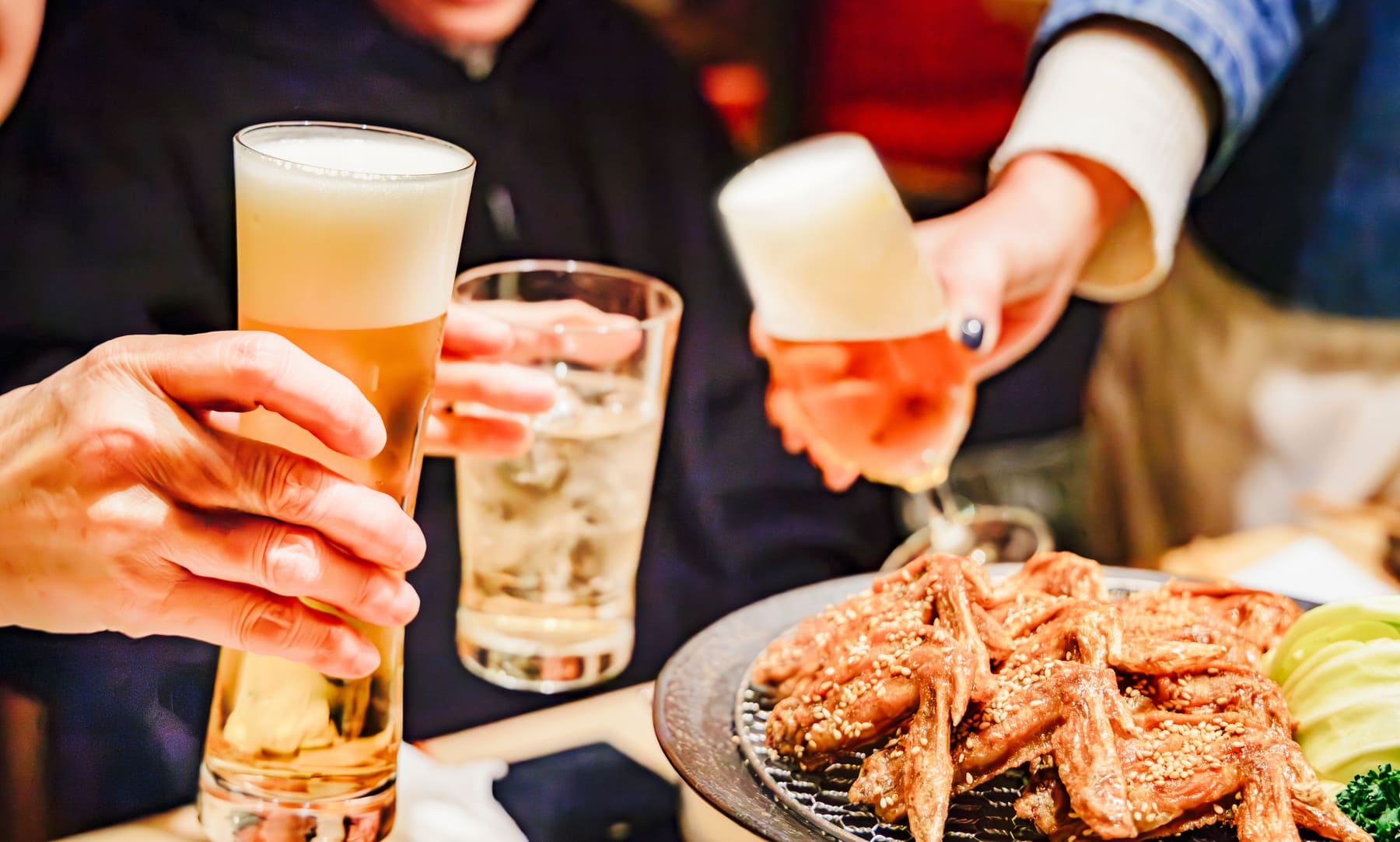
An izakaya is a Japanese pub, and for many people in Tokyo it is where an evening out begins and ends. You order drinks first, then small dishes to share over two or three hours: grilled skewers, sashimi, fried chicken, simmered dishes, and something with rice or noodles to finish. It is a sociable way to eat, and one of the easiest for a group that cannot agree on what to eat.
How an izakaya works
Drinks come first. Staff usually ask for your drink order as soon as you sit down, before you have opened the food menu, and the first round arrives quickly. Many groups start with beer for everyone; you will hear people ask for "toriaezu nama", meaning a draught beer for now. Order a few dishes to start and add more as the evening goes on, rather than ordering everything at once.
Many izakaya serve a small dish you did not order as soon as you sit down, to go with your first drink. This is otoshi, sometimes called tsukidashi, and it is often added to the bill automatically as a cover charge, according to the Tokyo Convention & Visitors Bureau. It is the custom, not a mistake. If you would rather know the cost or skip it, ask when you book or when you order.
Dishes are shared. They arrive when they are ready, not in courses, and everyone takes from the plates in the middle of the table. Small plates for each person and chopsticks are provided. If you want a dish for yourself alone, order it twice.
What to order
The menu is usually long and grouped by cooking method. Good dishes to start with are edamame, salted soybeans in their pods; hiyayakko, chilled tofu with toppings; and a plate of sashimi. Then move on to grilled and fried dishes: yakitori skewers, karaage fried chicken, grilled fish, rolled omelette and agedashi tofu, which is fried tofu in a light broth. Most izakaya finish with something more filling, such as rice balls, fried rice, noodles or ochazuke, rice with tea or broth poured over it.
Beer is the usual first drink. After that, people move on to highballs (whisky with soda), sours (shochu with soda and fruit juice, often lemon), sake, shochu or plum wine. Soft drinks and oolong tea are widely available, and not drinking alcohol is fine.
Many izakaya offer nomihodai, an all-you-can-drink plan with a time limit, usually as part of a set course for a group. It is good value if your group drinks steadily. The time limit is strict, the drinks list on the plan is often shorter than the full menu, and last orders are called before the time is up.
Types of izakaya
Chain izakaya are large, inexpensive and easy for visitors, with picture menus or tablets that often have an English setting. They take groups, are open late, and are used to families early in the evening. Small independent izakaya may have a handwritten menu in Japanese only. Pointing at what your neighbours are eating, or asking the staff for a recommendation, is perfectly acceptable.
Tachinomi are standing bars, where you drink and eat small dishes at a counter without a seat. They are cheap and quick, and many are near stations. Yokocho are narrow alleys of tiny bars and izakaya, often under or beside railway tracks, where each place has only a few seats.
Booking and when to go
Book if you are a group, especially on Friday evenings and before public holidays, when office groups fill the larger izakaya. December is the busiest time of all, when companies and groups of friends hold bonenkai, end-of-year parties. Many places set a time limit on tables, typically stated on the menu or when you book. Small izakaya and standing bars usually do not take bookings for one or two people; you walk in and see if there is room.
Since April 2020, restaurants in Tokyo have been non-smoking inside except in separate smoking rooms. A few small bars and izakaya run without staff may still allow smoking; they must say so on a sign at the door, and nobody under 20 may enter.
Where to go
Shimbashi, near Ginza, is known for izakaya filled with office workers after work. The arches under the railway tracks around Yurakucho have rows of small izakaya. In Shinjuku, Omoide Yokocho is an alley of tiny yakitori and izakaya counters next to the station, and Shibuya has Nonbei Yokocho, a short lane of small bars. Further west, Kichijoji has Harmonica Yokocho, a maze of small bars and restaurants by the station.
These alleys are popular with visitors and can be crowded. Seats are few, and some places prefer customers who will stay and order, so it is polite to leave if you are only looking. Outside the well-known alleys, the izakaya near any large station will give you a similar evening with more room.
Paying, children and dietary needs
When you are ready to leave, ask for the bill (o-kaikei) at the table or take it to the till by the door. The bill includes the cover charge, and sometimes a service charge at larger or late-night places. Splitting the bill item by item is unusual; groups usually divide the total. Tipping is not expected. Carry some cash, because small places may not take cards.
Many chain izakaya welcome children, especially early in the evening, and the menus have dishes that suit them. Look for the smoking sign at the door of small bars: where smoking is allowed, nobody under 20 may enter. For vegetarians, izakaya usually have some tofu, vegetable and rice dishes, but many are made with fish stock (dashi), so ask before you order.
Sources
- Tokyo Metropolitan Tama-Kodaira Public Health Centre: small restaurants without staff that may allow smoking (Japanese)
- Tokyo Metropolitan Government Bureau of Public Health: smoking signs for restaurants (PDF, Japanese)
- Tokyo Convention & Visitors Bureau (GO TOKYO): How to Enjoy Tokyo, manners guide, September 2025, page 12 (PDF)
Figures checked against the sources above on 12 November 2026.
We are still choosing the restaurants for this page. Until they are here, our guides cover how to book and what to expect.