Cuisine
Conveyor-belt sushi in Tokyo
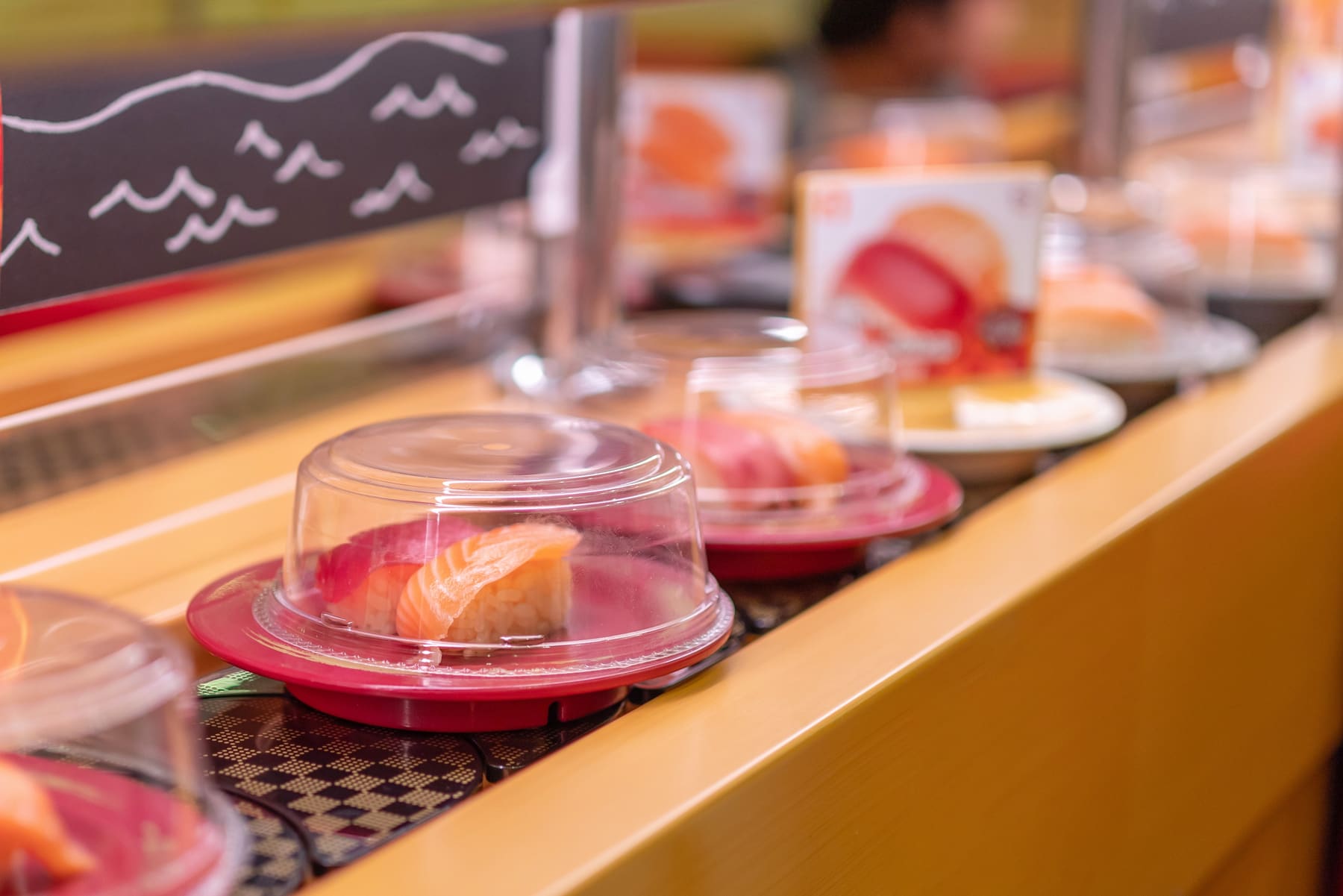
Kaiten-zushi, conveyor-belt sushi, is one of the cheapest and least intimidating ways to eat sushi in Tokyo. Plates travel past your seat on a belt, or you order on a touch screen and the plate arrives on a lane of its own. You do not need Japanese, you do not need to book at most branches, and you can stop whenever you have had enough.
How it works
Each plate carries one or two pieces of sushi, or a small dish. At many shops the price is shown by the colour or pattern of the plate, with a chart on the wall or the screen; at others most plates cost the same. In September 2026, a plate of two tuna (akami) nigiri at conveyor-belt shops in Tokyo's 23 wards averaged ¥241 including tax, according to Japan's Retail Price Survey; what you pay for a plate depends on the shop and the plate. Your bill is counted from the plates you have taken, so keep the empty plates stacked at your place unless the shop asks you to do otherwise.
At some chains you drop empty plates into a slot in the table, which counts them for you. Take a plate from the belt only if you mean to eat it. Once a plate has left the belt, do not put it back, even if you change your mind; other people will eat from that belt after you.
The menu goes well beyond sushi. Most chains also serve miso soup, chawanmushi (a savoury egg custard), fried chicken, chips, noodles and desserts, which makes them an easy choice for families and for anyone in a group who does not want raw fish.
How to order
The touch screen at your seat is the main way to order. The large chains have an English setting, usually behind a button with a flag or the word English, and the screen shows a photograph of most dishes. What you order arrives on a separate express lane or is brought to your seat, and the screen or a chime tells you when it is there.
Everything else is at your seat. Green tea is self-service: put a spoonful of the powdered tea in a cup and fill it from the hot-water tap at your seat. The water is very hot, so keep children's hands away from it. Soy sauce, pickled ginger, and often wasabi in sachets are on the table. Many chains serve sushi without wasabi and leave it to you to add.
Getting a table
At busy branches you take a numbered ticket from a machine near the entrance and wait for your number to be called or shown on a screen. Choose between a counter seat, which suits one or two people, and a table, which seats a group. Many of the large chains also let you join the queue or book a time through their own app or website, which is the simplest way to avoid a long wait at a weekend.
The busiest times are weekend lunch and evening, and school holidays. A weekday in the middle of the afternoon is usually the quietest. Branches near large stations and in shopping centres fill earliest. Eating alone is normal at a conveyor-belt shop, and a single diner is often seated at the counter sooner than a group waiting for a table.
Paying
When you have finished, press the button on the screen to ask for the bill, or take the slip from your seat to the till, depending on the shop. A staff member may come to count the plates, or the system may already have done it. Many chains now use self-service payment machines near the exit.
Which payment methods are accepted varies by chain and by branch. Cards are common at the large chains, but do not assume it; carry some cash. Tipping is not expected.
Chains and independent shops
Many of the conveyor-belt shops you will pass belong to a few national chains, which are inexpensive, consistent and easy for visitors. There are also independent conveyor-belt shops, often run by a fish wholesaler or close to a fish market, which usually charge more per plate and often feature the day's fish. At these, the chefs inside the ring of the belt will often make pieces to order if you ask them directly.
If you want the conveyor-belt format and a step up in quality, look for these independent shops or for the higher-priced lines that some chains run under a separate name. For a full sushi counter, see our guide to sushi in Tokyo.
Allergies and dietary needs
Large chains usually publish allergy information for their menu, on their website or on request in the shop. Smaller shops may not. If you have a serious allergy, a written card in Japanese is more reliable than asking a busy member of staff, and remember that soy sauce contains wheat.
For vegetarians, conveyor-belt shops have more choice than a sushi counter: cucumber rolls, sweetcorn and some side dishes and desserts. Check the ingredients where you can, because many soups and egg dishes are made with fish stock.
Sources
- Retail Price Survey, Statistics Bureau of Japan (e-Stat table 0003421913, item 2123 conveyor-belt sushi), September 2026 (Japanese)
- Statistics Bureau of Japan: items and standard specifications, September 2026 survey (Excel, Japanese)
- Statistics Bureau of Japan: prices in the Retail Price Survey include tax (Japanese)
Figures checked against the sources above on 12 November 2026.
We are still choosing the restaurants for this page. Until they are here, our guides cover how to book and what to expect.